Oppo Reno16 review

Verdict
In-depth review of the Oppo Reno16
Introduction and unboxing
Introduction and specs
Unlike the Reno15 series where the vanilla and the Pro models stood quite far apart, Oppo decided to bring the two devices closer together when designing the Reno16 family. The regular Oppo Reno16 is now the same size as the Reno16 Pro and shares more of its hardware with its more expensive sibling.
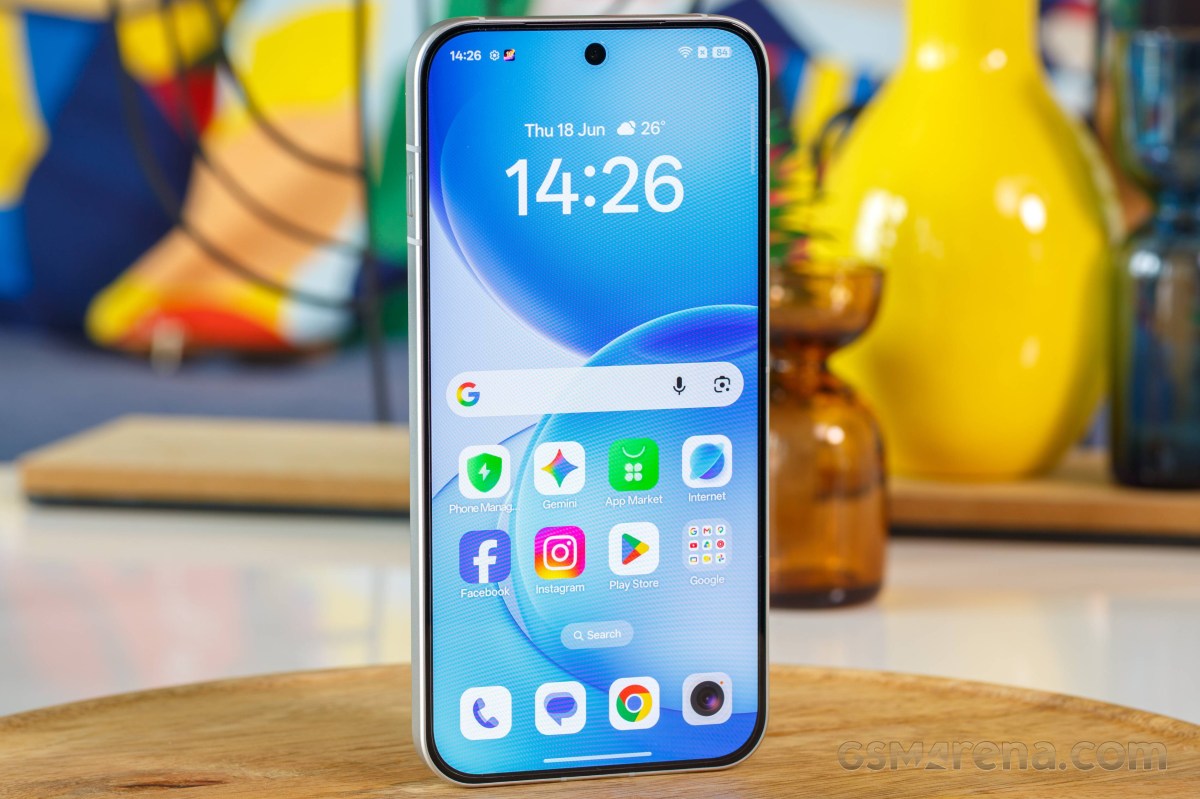
What's different? Well, the standard Reno16 runs on a less powerful chipset than the Reno16 Pro - Snapdragon 7 Gen 4. It's actually the same exact chipset that powers the Reno15.
The Reno16 also hosts a slightly downgraded camera setup compared to the Pro model, replacing the main 200MP camera with a 50MP one, but retains the excellent ultrawide and selfie shooters. On the other hand, it introduces a much-needed upgrade to the ultrawide camera, replacing the dated 8MP sensor with a more capable 50MP one.
Oppo Reno16 specs at a glance:
- Body: 151.2x72.4x8.2mm, 188g; Glass front, aluminum frame, glass back or composite plastic back; IP68/IP69K dust tight and water resistant (high pressure water jets; immersible up to 1.5m for 30 min).
- Display: 6.32" AMOLED, 1B colors, 120Hz, 3840Hz PWM, HDR10+, 600 nits (typ), 1800 nits (HBM), 3600 nits (peak), 1216x2640px resolution, 19.54:9 aspect ratio, 460ppi.
- Chipset: Qualcomm SM7750-AB Snapdragon 7 Gen 4 (4 nm).
- Memory: 256GB 8GB RAM, 256GB 12GB RAM, 512GB 8GB RAM, 512GB 12GB RAM; UFS 3.1.
- OS/Software: Android 16, ColorOS 16.
- Rear camera: Wide (main): 50 MP, f/1.8, 26mm, 1/1.95", 0.8µm, PDAF, OIS; Telephoto: 50 MP, f/2.8, 80mm, 1/2.75", 0.64µm, PDAF, OIS, 3.5x optical zoom; Ultra wide angle: 50 MP, f/2.0, 16mm, 116˚, 1/2.88", 0.61µm, AF.
- Front camera: 50 MP, f/2.0, 18mm, 100˚ (ultrawide), 1/2.75", 0.64µm, AF.
- Video capture: Rear camera: 4K@30/60fps, 1080p@30/60/120fps, gyro-EIS, HDR, OIS; Front camera: 4K@30/60fps, 1080p@30/60fps, gyro-EIS, HDR.
- Battery: 6,700mAh; 80W wired, 55W PPS, 13.5W PD/QC, 100% in 59 min, Reverse wired.
- Connectivity: 5G; eSIM; Wi-Fi 6; BT 5.4, aptX HD, aptX Adaptive, LHDC 5; NFC; Infrared port.
- Misc: Fingerprint reader (under display, optical); stereo speakers.
The Reno16 has the same 6.32-inch screen as the Pro model, which is smaller than before. Seemingly, Oppo is trying to penetrate two different price segments with compact phones, which might not be a bad plan as compact smartphones are far and few between these days.
Just like the Pro model, the battery situation is a bit convoluted. If you are situated outside of Europe, the Reno16 brings a modest upgrade in the battery capacity from 6,500 mAh to 6,700 mAh, compared to the Reno15. However, if you are a European consumer, expect that capacity to fall to 6,000 mAh. In fact, that's the model we received for a review.
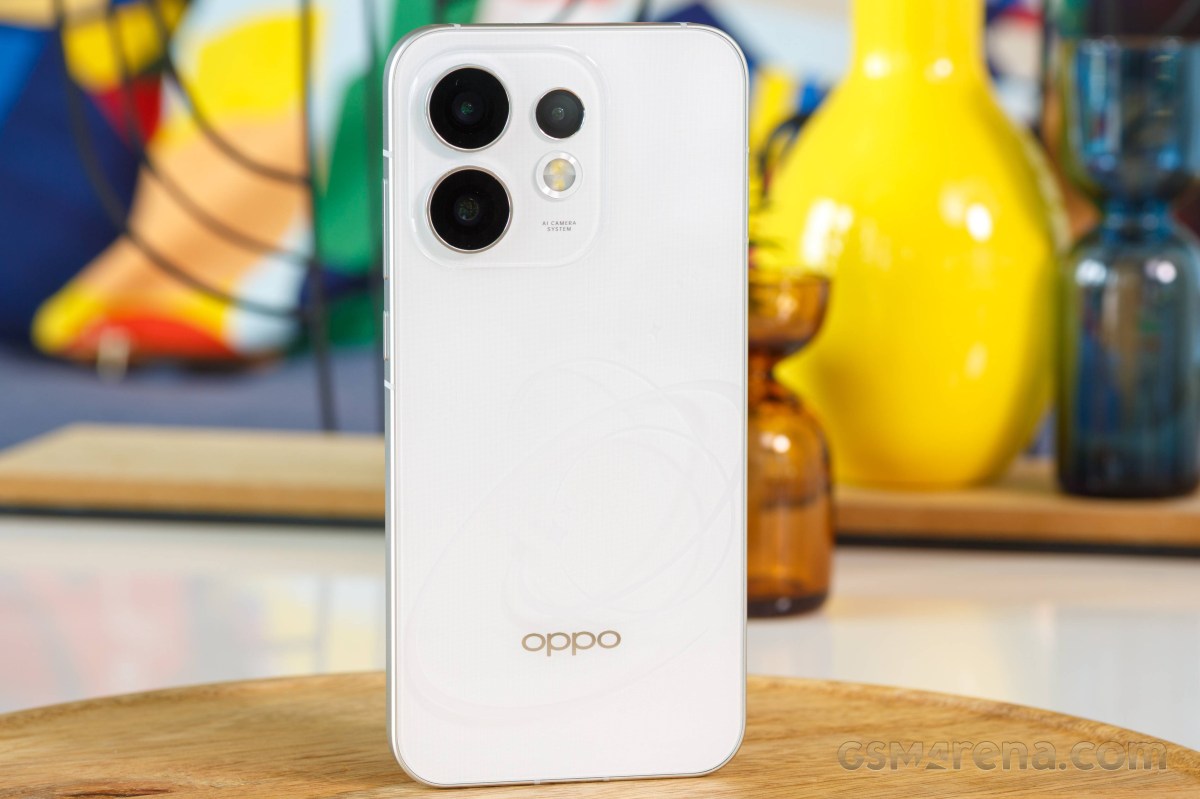
At least the fast charging speeds are impressive regardless of the market. Reno16 still supports Oppo's 80W SuperVOOC charging.
Enough internal comparison, it's time to see how the Reno16 performs in real life and how it stacks against the competition.
Unboxing the Oppo Reno16
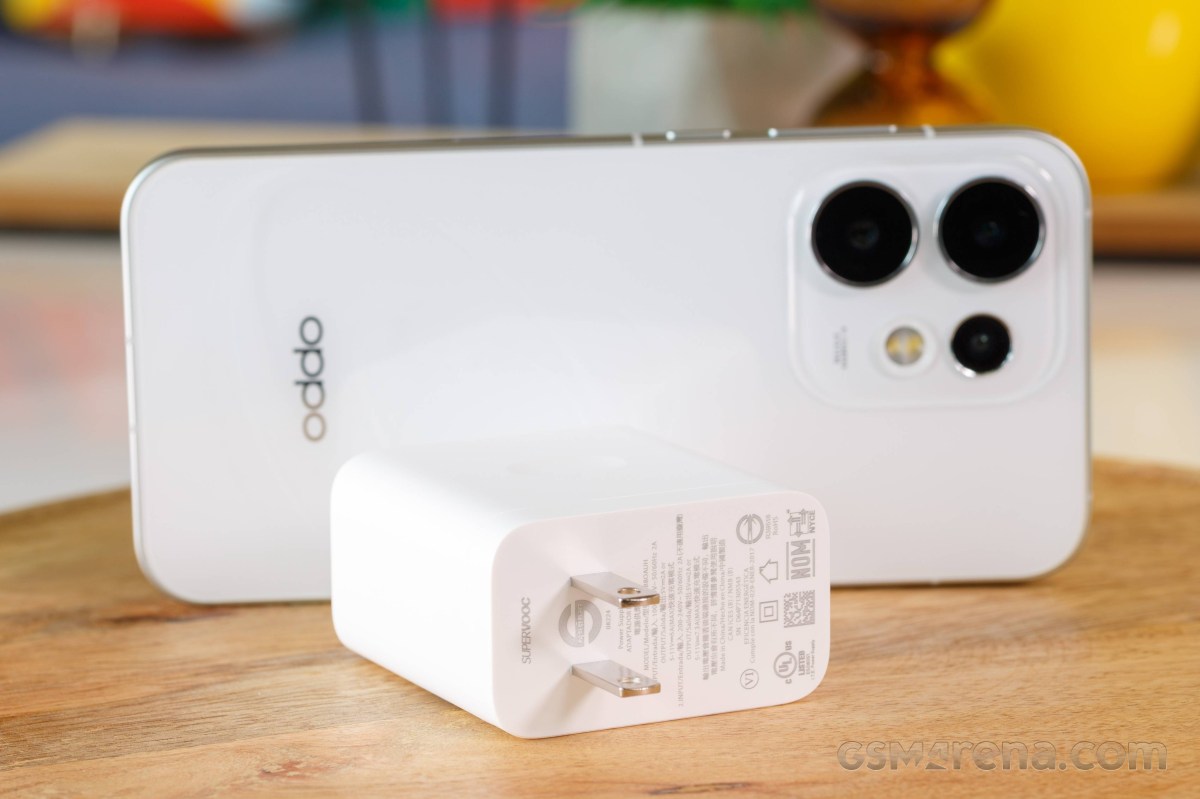
The Oppo Reno16 review unit we received came with a USB-A to USB-C cable for charging and data transfer, an 80W SuperVOOC charger and a transparent silicone case.
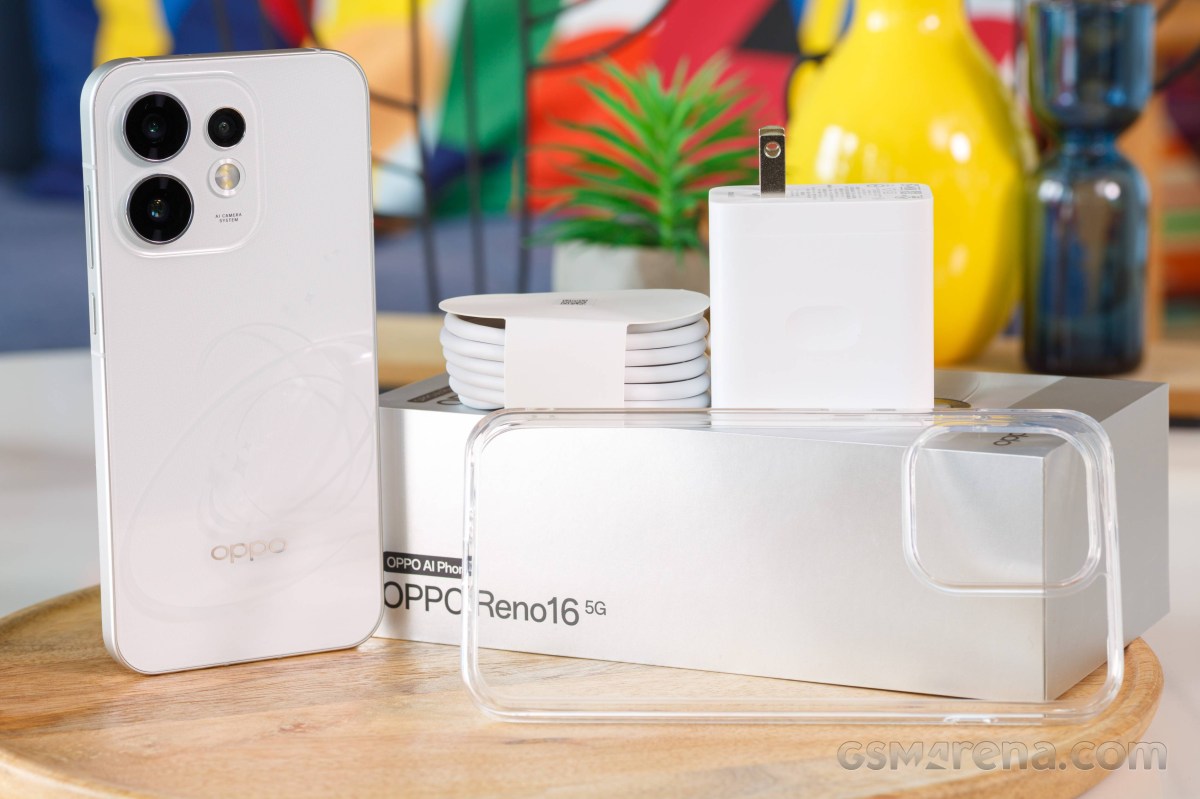
This is the type of retail package you'd normally expect in a market outside of the EU, but if you are buying this phone on the Old Continent, you won't have the charger in the box and you'll have to get it separately to make the most out of the phone's fast-charging capabilities.
Design, build, handling
Design and build
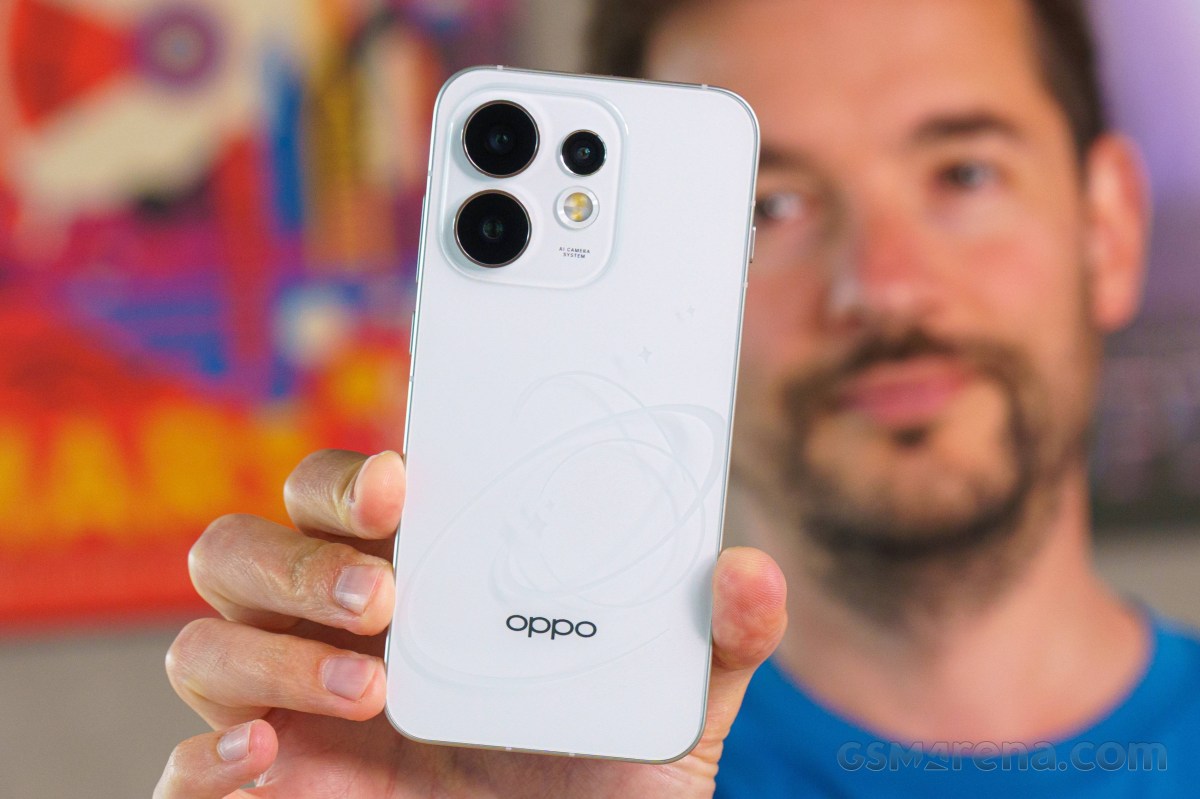
The Reno16 and Reno16 Pro have absolutely identical design, dimensions and weight. And that's good news for the regular Reno16. It's cheaper but offers the same high-quality build and premium feel. That distinctly premium, almost iPhone-esque aesthetic and physical feel remain intact.
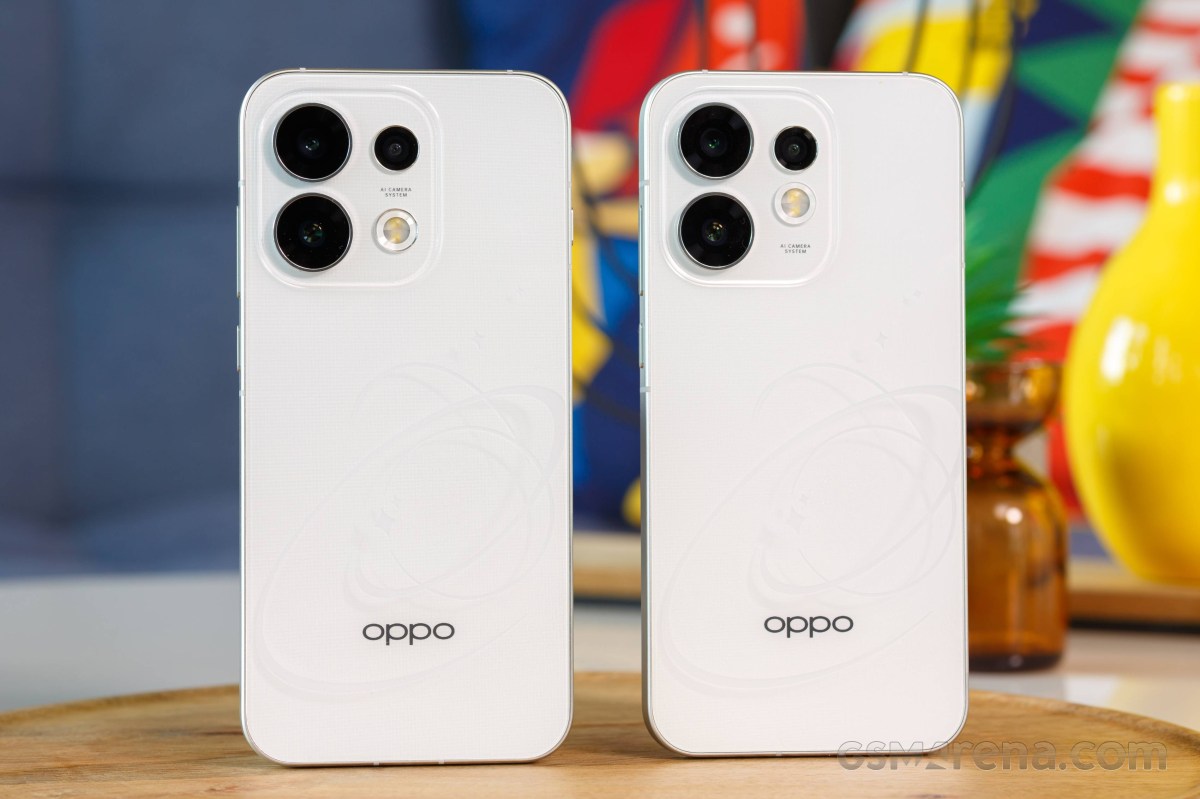 Oppo Reno16 vs. Reno16 Pro
The device features a Gorilla Glass 7i protective sheet for the display, surrounded by aerospace-grade aluminum frame. The material for the rear glass panel is unspecified.
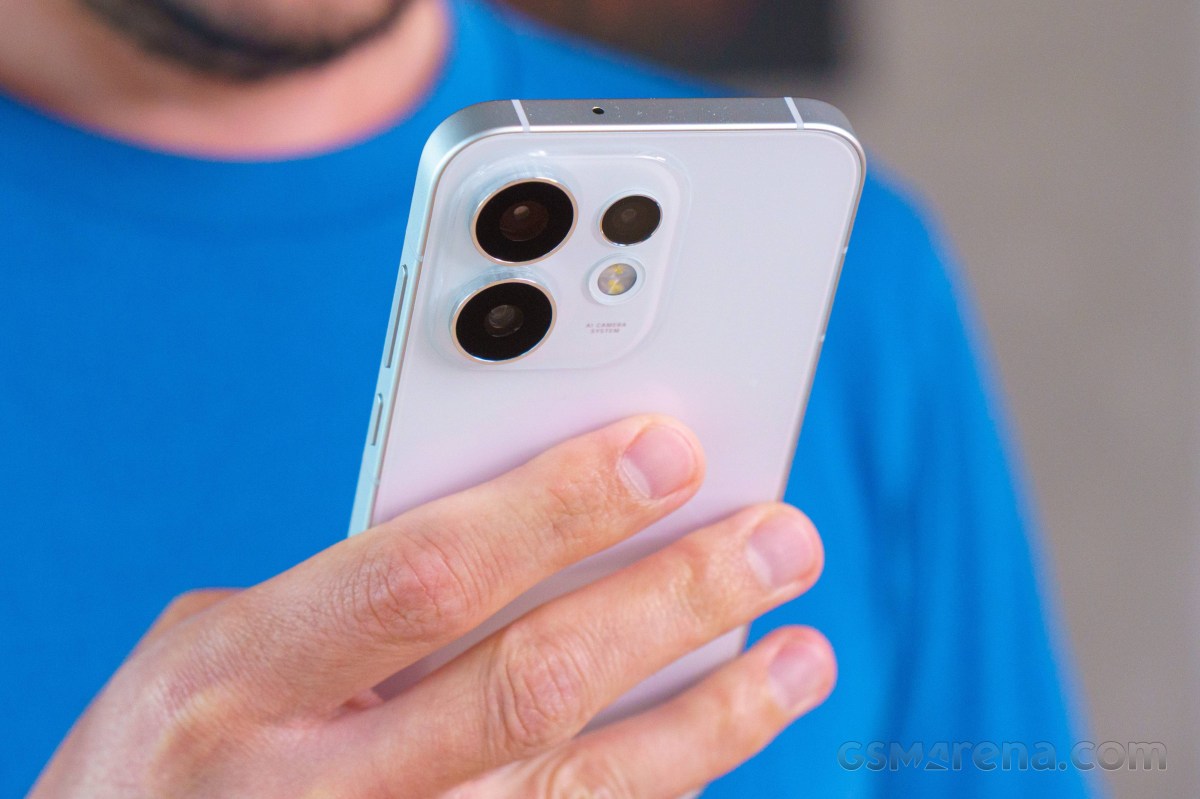
Thanks to its compact screen diagonal and slim profile, the phone feels ergonomic, making it a joy to use, even with one hand.
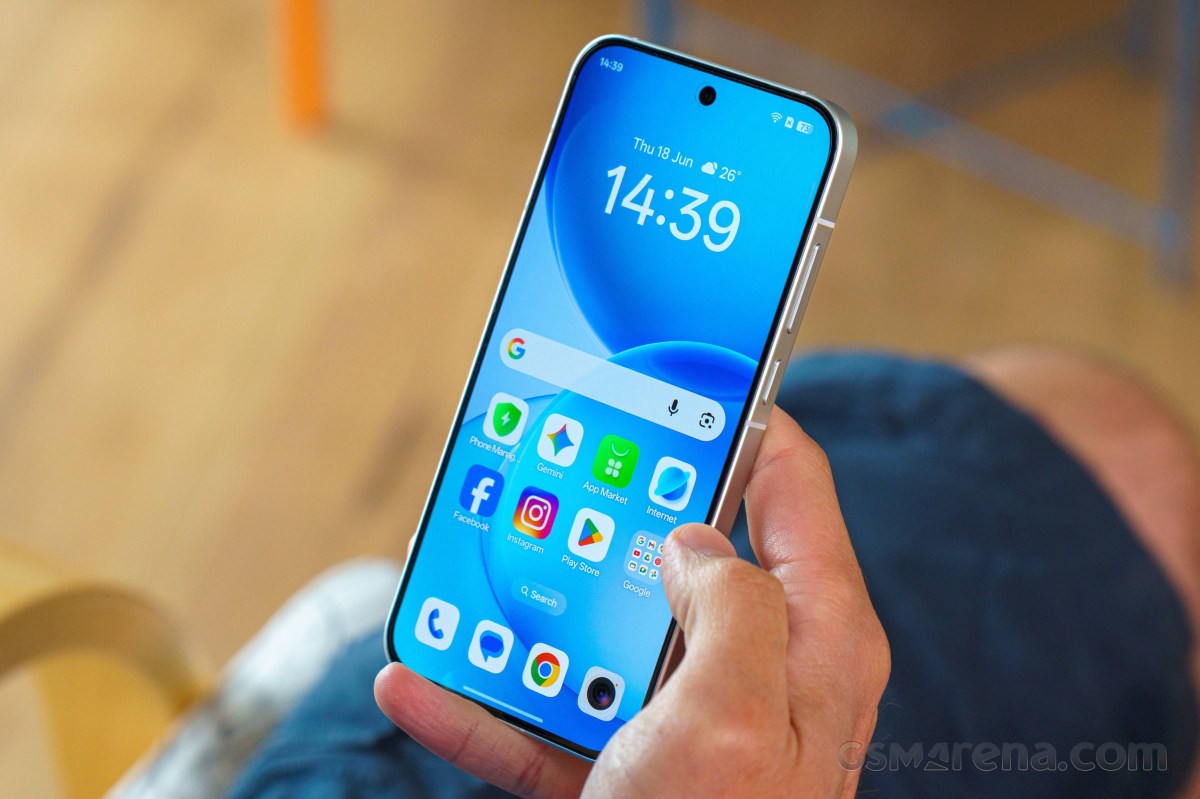
It is also exceptionally well protected against the elements, packing an impressive list of ingress protection certifications: IP66, IP68, IP69, and IP69K. This means it can withstand water, dust, and high-pressure jets.

Oppo Reno16
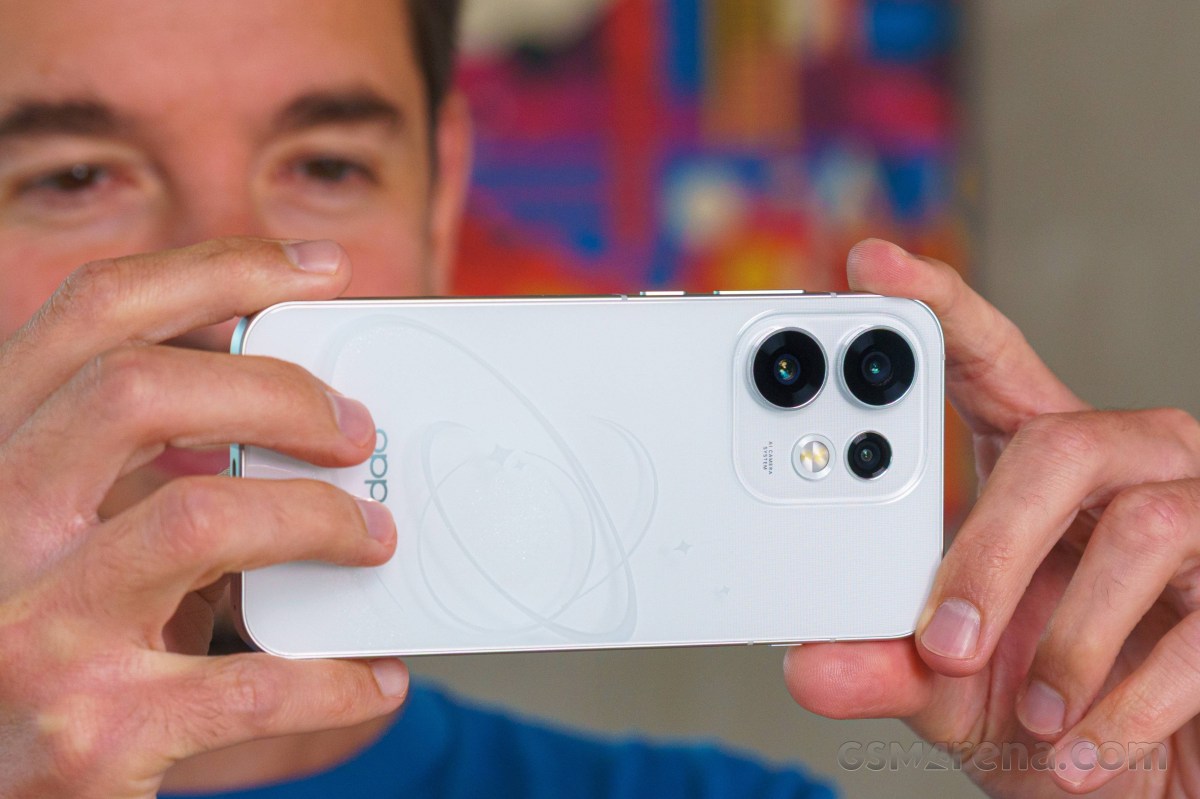
Unlike the Pro model, the vanilla Reno16 gets three colorways - Twilight Violet, Dream Purple and Pop White. The Pop White and Dream Purple variants are particularly impressive, utilizing a distinct 3D pop effect shaped like a planet on the rear panel. Tilting the device under direct lighting causes the graphic to shift and cast a subtle shadow. The test unit we have rocks the Pop White color scheme.

Going around, the right edge houses the volume rocker alongside the power button, while the left side hosts Oppo's dedicated AI Snap Key. Down at the bottom, the SIM tray accommodates up to two physical nano-SIM cards. The hardware supports eSIM functionality as well, though you can only keep two lines active at any given time.
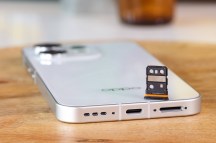


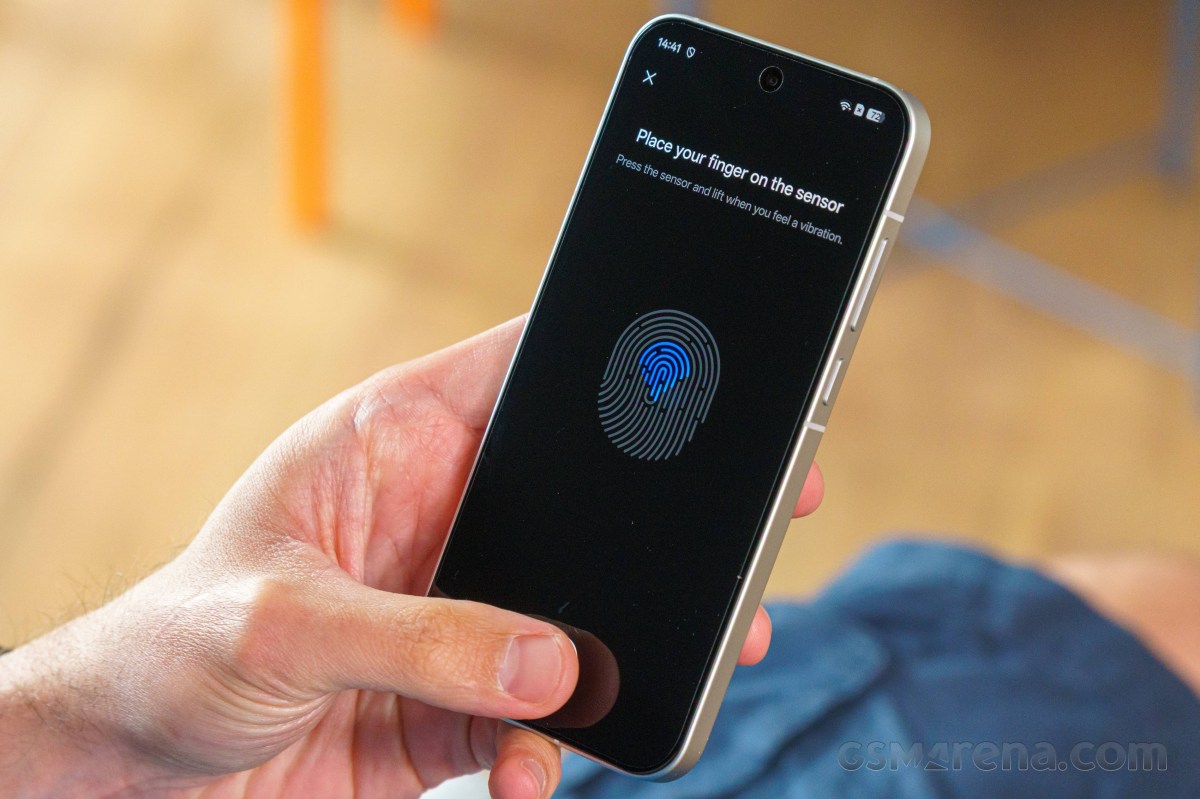
Biometric unlocking is handled by an under-display optical fingerprint scanner, which proved fast and reliable throughout our review period. Our only real complaint is its positioning as it's set a bit too low, hovering right near the bottom lip, forcing an awkward thumb stretch when reaching for it.
Ultimately, the Reno series has always relied on aesthetic appeal as a major selling point, and the current generation refines that formula well.
Lab tests - display, battery life, charging, speakers
Smaller 6.32-inch, 120Hz OLED display
The Oppo Reno16 sports the same 6.32-inch display as its more expensive Reno16 Pro sibling - 6.32", 1216 x 2640px resolution, 10-bit color depth and HDR10+ support. The refresh rate is capped at 120Hz, but and we don't think this is a big difference. The Reno16 Pro's 144Hz refresh rate was hard to take advantage of - it's supported only in one game.
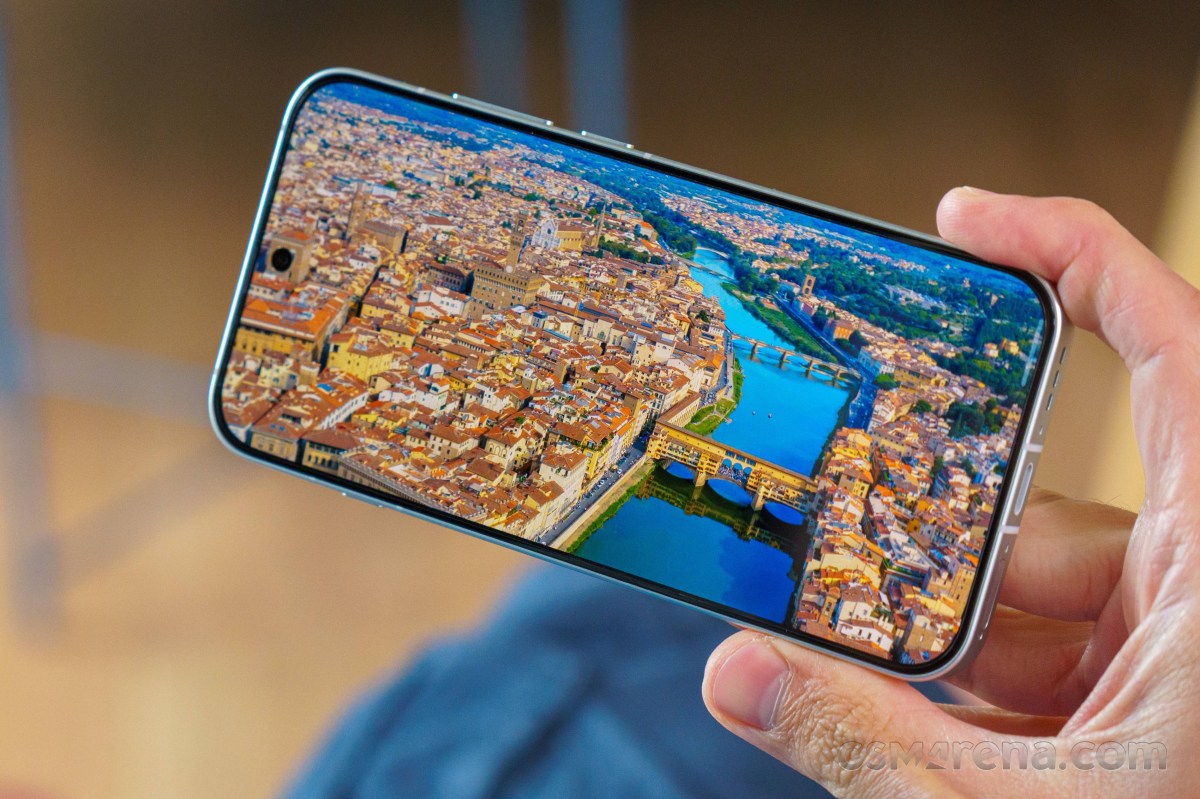
When it comes to brightness, the Reno16 delivers well. We are also happy to report that we didn't see the same brightness issues that the Pro model had. The Reno16 easily reached more than 2,100 nits in auto mode on a 75% white patch and went over 3,500 nits on a 10% patch. Those results ensure excellent outdoor viewing experience and HDR performance.
Max display brightness test
White test pattern (nits)
- Manual (75% fill)
- Auto (75% fill)
- Peak Auto (10% fill)
 Oppo Reno16 (Gallery)
 Pixel 10
 Oppo Reno16 Pro
 Oppo Reno15
Oppo Reno16
Oppo Reno15
Oppo Reno16
 Poco X8 Pro Max
 Xiaomi 17T
Even in a browser, where the system doesn't boost the brightness that high, the 1,000+ nits are perfectly fine for a comfortable outdoor use, even on a bright sunny day.
The minimum recorded brightness is 1.9 nits, which is good enough for a pitch-black room.
Refresh rate
The refresh rate modes are as usual - Auto, Standard and High. Auto and High behave the same way - 60Hz for idle screen and video playback, 90Hz for web browser and system apps, 60Hz for Netflix, YouTube, Camera, and more, 120Hz for UI, games, and benchmarks.
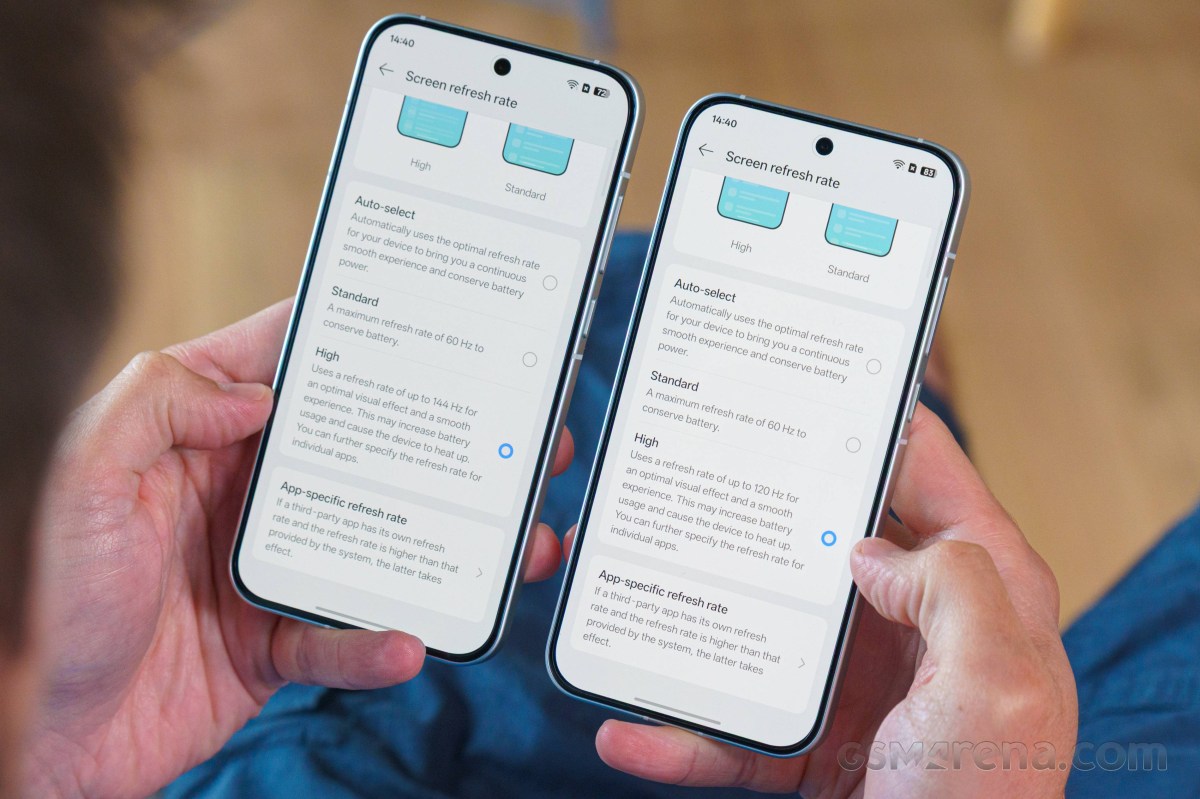
However, in Chrome, for example, you get only 90Hz unless you force it through the High setting, as it offers per-app refresh rate adjustments.
Battery life
Depending on where you live, the Reno16 has either bigger or smaller battery than its predecessor. In Europe, for instance, the device features a 6,000 mAh battery, a step down from the Reno15's 6,500 cell. On the other hand, the international Reno16 variant gets a 6,700 mAh battery, which is a tad more than before. We reviewed the 6,000 mAh version.
Even so, the 16:45 Active Use Score is respectable, even considering the size of the display.
Charging speed
The Reno16 is about average when it comes to charging speed with its 80W SuperVOOC charging support. It's slightly faster than some, but there are handful of other devices outpacing the vanilla Reno.
Interestingly, the device posted slower charging times compared to its predecessor, which has a slightly bigger 6,500 mAh battery.
Since the Pro posted considerably slower charging times than its predecessor with the new 6,700 mAh battery, we have our suspicion that Oppo didn't want to make the Pro look bad, so it changed the charging curve of the regular Reno16 as well. We can't think of any other reason why the Reno16 charges much slower than its predecessor.
Charging speed
- in 15 min
- in 30 min
- Time to full charge (from 0%)
 Honor 600
 Nothing Phone (4a) Pro
Poco X8 Pro Max
Oppo Reno16
Xiaomi 17T
Pixel 10
Oppo Reno16 Pro
Nothing Phone (4a) Pro
Poco X8 Pro Max
Oppo Reno16
Xiaomi 17T
Pixel 10
Oppo Reno16 Pro
Bypass charging is available, which will come in handy if you are gaming and don't want to heat up your phone and cripple your performance.
Smart charging and charging limit are available options for those wanting to extend the lifespan of the battery.
Speakers
The Reno16 features a set of hybrid stereo speakers, one in the earpiece and one full-fledged speaker at the bottom. Naturally, the bottom one is slightly louder and offers fuller bass.
Judging by the tuning and the loudness score we got, Oppo upgraded the speakers on the Reno16 and are now in line with the Reno16 Pro's. The two models seemingly share the same audio hardware.
The newer Reno offers an extended loudness slider to 300%, achieving a "Very Good" -23.8 LUFS loudness score. For the record, without the loudness boost, the handset achieved -26.1 LUFS, which is still pretty solid.
When assessing audio quality, we recorded the loudspeakers at 100% volume. We noticed that the bass is slightly less pronounced than we would like, but overall tuning is much better than most competitors. Except, of course, the Poco X8 Pro max, which excels in this department. It has a dedicated subwoofer.
Use the Playback controls to listen to the phone sample recordings (best use headphones). We measure the average loudness of the speakers in LUFS. A lower absolute value means a louder sound. A look at the frequency response chart will tell you how far off the ideal "0db" flat line is the reproduction of the bass, treble, and mid frequencies. You can add more phones to compare how they differ. The scores and ratings are not comparable with our older loudspeaker test. Learn more about how we test here.
Software and performance
Familiar ColorOS 16 on top of Android 16
Since the Reno16 series and the Reno15 series came out about six months apart, it's no surprise that the newer generation runs on the same software. Both the 16 and 15 series are also entitled to 5 years of major OS updates (not mentioning the exact number of updates, though) and 6 years of security patches. But both series start from ColorOS 16, which is based on Android 16.
We've covered the software already in our extensive Reno15 review so make sure to check that one out.
Home screen • Quick toggles • Recent apps
Interestingly, there are a few new features that debuted with the Find X9 Ultra, and you can find most of them on the Reno16 as well. For example, the AI Mind Space functionality is under the AI Mind Space. It offers integration with Google's Gemini, Perplexity AI, and DeepSeek. You can ask them to do one, but a more complicated query, or simply use them to compare answers and perspectives. It's a convenient way to ask more than one AI chatbot to look for relevant information.

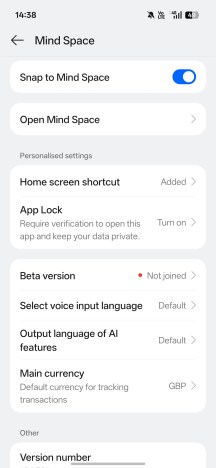
Oppo AI
You also get the Snap Key from the X9 Ultra, which is also called the Plus Key on OnePlus phones. In the Reno16, Oppo adds "AI" in the beginning because that's what everyone does these days.
AI Snap Key
Anyway, the AI Snap Key is exactly what you'd expect from a hardware button on the side - it launches AI Mind Space by default, but you can remap it to your liking.
Benchmark performance
The Oppo Reno16 uses the same Snapdragon 7 Gen 4 chipset based on the 4nm manufacturing node as its Reno15 predecessor. The SD7G4 chip packs an 8-core processor with 1+4 +3 configuration. There's a Cortex-720 prime core clocked @ 2.8GHz, plus 4x performance Cortex-720 cores @ 2.4GHz and 3x efficiency Cortex-520 cores @ 1.8GHz.

The Adreno 722 GPU clocked at 1150 MHz handles all graphics. It features select Snapdragon Elite Gaming features, including its Adaptive Performance Engine 4.0. The GPU also supports the HDR10, HDR10+, HDR Vivid and HLG codecs.
The available memory configurations are 8GB/256GB, 12GB/256GB and 8GB/512GB. The latter is only available in Europe and coincidentally, it's the only available storage variant on the Old Continent. Regardless of the version you choose, you get UFS 3.1 storage.
GeekBench 6
- Single-core
- Multi-core
Poco X8 Pro Max
Xiaomi 17T
Oppo Reno16 Pro
Nothing Phone (4a) Pro
Honor 600
Oppo Reno16
Oppo Reno15
AnTuTu
- v10
- v11
Poco X8 Pro Max
Xiaomi 17T
Pixel 10
Nothing Phone (4a) Pro
Oppo Reno16
Honor 600
Oppo Reno15
3DMark
- Wild Life Extreme (Highest)
- Wild Life Extreme (Lowest)
Poco X8 Pro Max
Xiaomi 17T
Pixel 10
Nothing Phone (4a) Pro
Oppo Reno15
Oppo Reno16
Honor 600
The benchmark results show that the Reno16 utilizes the Snapdragon 7 Gen 4 to the fullest. It performs equally well as other handsets running the same chipset, like the Reno15 and the Honor 600. In fact, the Reno16 outpaces the latter by a little, but we believe the difference is within the normal margin of error.
However, it's quite evident from the charts that the Snapdragon 7 Gen 4 is far from the most powerful chip in this class. Aside from the Honor 600, the res of the competing handsets offer more computing power.
Sustained performance
Even though the Reno16 features a chipset that's supposedly easy to handle during long and heavy workloads, the CPU stress test leaves more to be desired. In fact, the Reno16 seems to fare slightly worse than is predecessor, which has the same exact chipset.
CPU and GPU stress tests
The GPU stress test, on the other hand, returned solid results.
Camera, photo and video quality
An upgraded ultrawide completes a 4x50MP setup
The Reno16 misses out on the Pro's large-sensor high-res main camera, but this new model does come with an upgrade to the ultrawide, compared to the previous non-Pro, and we're now looking at a triple 50MP setup on the back. The selfie camera is the old one - another 50MP unit, making up a quad 50MP configuration on the Reno16.
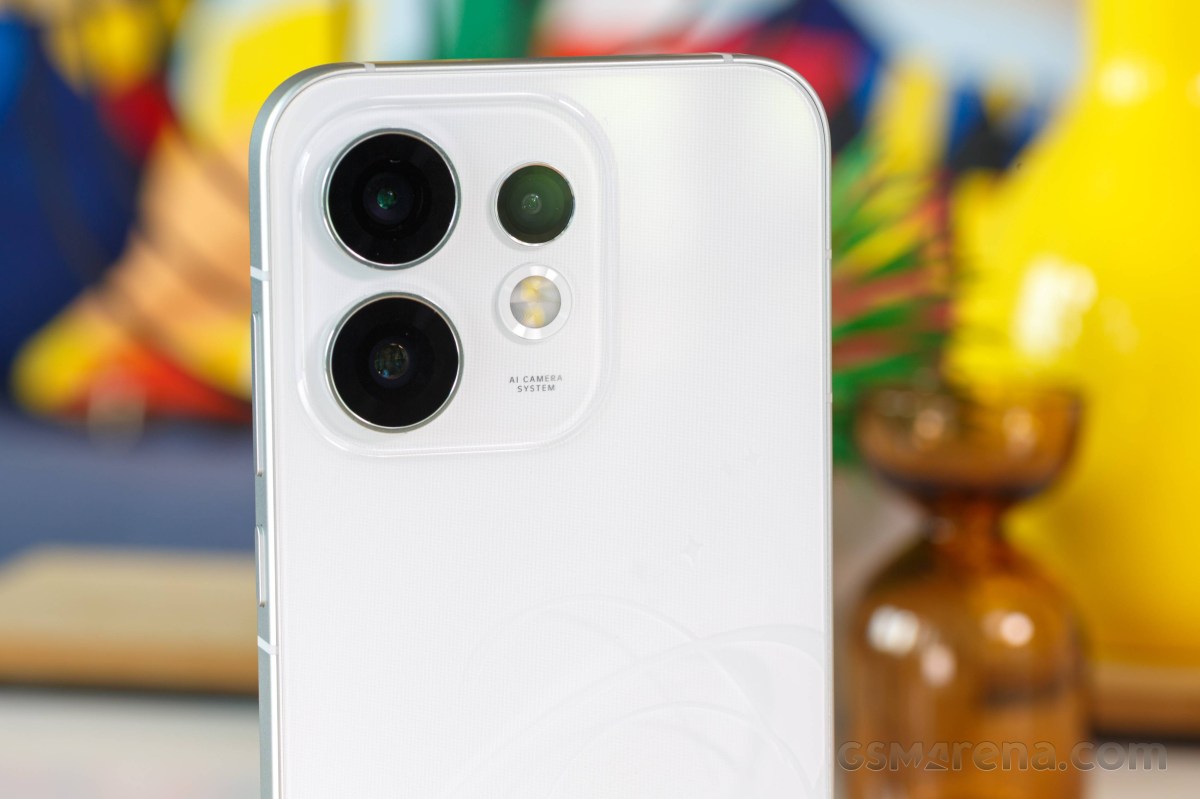
The Reno15 featured a modest 8MP ultrawide which did have AF, but the resolution could still leave you wanting. That's been addressed now and Oppo has fitted a 50MP Quad Bayer type sensor to match the rest of the modules. It's a fairly obscure GalaxyCore imager, but we're not snobs in that particular way. It's also the same sensor that's fitted to the Reno16 Pro.
That same sensor has now made it to the Reno16's selfie camera, replacing the Samsung JN5 of the previous generation, which just might be a minor downgrade (1/2.88" vs. 1/2.76" is about the smallest of sensor size differences there can be). That also means the non-Pro doesn't have the same selfie camera as the Pro this time around, but Oppo still kept the ultrawide lens on the front - an 18mm equivalent, with autofocus too.
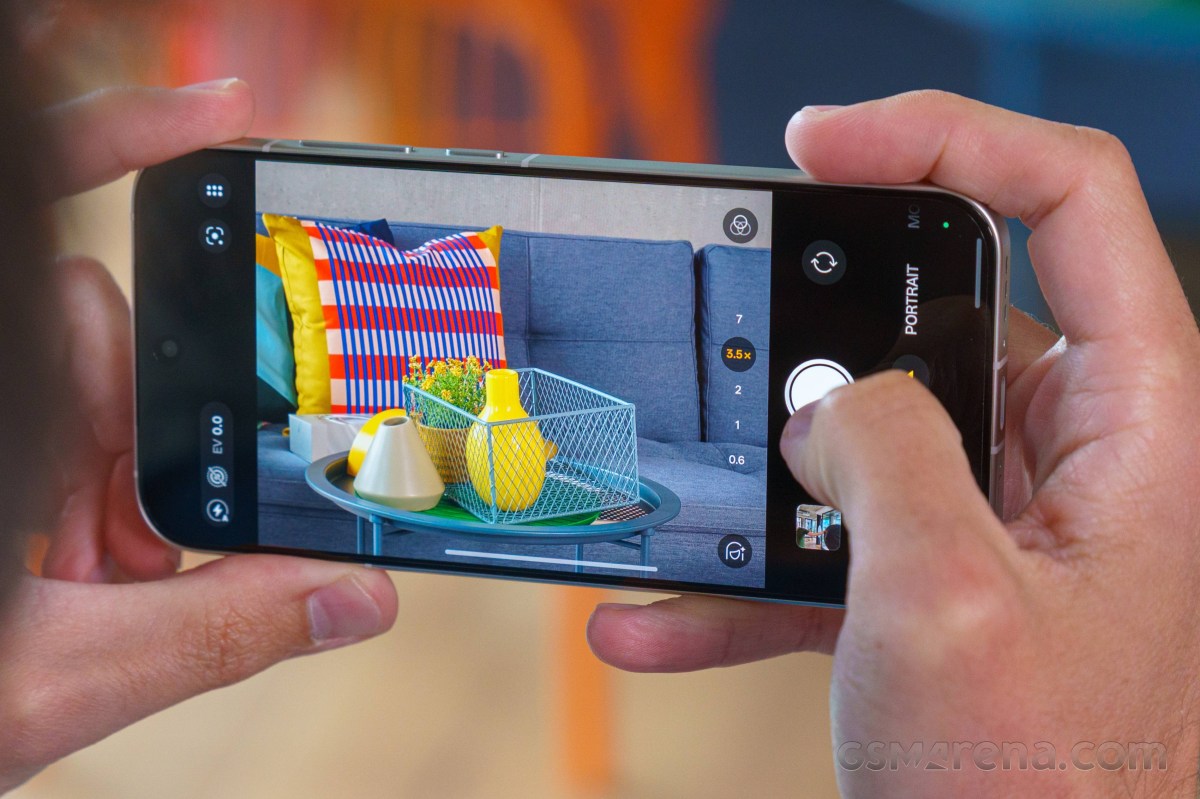
The main camera and the telephoto remain unchanged from the Reno15. There's a Sony sensor on the primary camera with a fairly narrow 26mm lens that's stabilized. The telephoto does get to keep the JN5 sensor, unlike the selfie camera, and it's using an 85mm equivalent lens, so the 3.5x ratio on the zoom selector in the viewfinder is a bit of a rounding error (85/26=3.3x).
- Wide (main): 50MP Sony LYT-600 (1/1.95", 0.8µm-1.6µm); 26mm, f/1.8, OIS, multi-directional PDAF (10cm - ∞); 4K60 video recording.
- Telephoto: 50MP Samsung ISOCELL JN5 (S5KJN5, 1/2.76", 0.64µm-1.28µm); 85mm, f/2.8, OIS, multi-directional PDAF (40cm - ∞); 4K60.
- Ultrawide: 50MP GalaxyCore GC50F6 (1/2.88", 0.61µm-1.22µm); 16mm, f/2.0, PDAF; 4K60.
- Front camera: 50MP GalaxyCore GC50F6 (1/2.88", 0.61µm-1.22µm); 18mm, f/2.0, PDAF; 4K60.
Daylight photo quality
Main camera
The Reno16 doesn't have the Pro's High-resolution option and since this time the Pro does actually tend to shoot in 26MP when you have that enabled, there's now a bit more of a difference in the daytime results you'd get from the two phones. However, while that may be the case, the vanilla Reno16 still captures quite great shots in good light.
We're looking at very good detail with mostly natural rendition, wide dynamic range, and generally pleasing (if a little unenthusiastic) colors.










Daylight samples, main camera (1x)
Similarly, skin tones could use a nudge in vibrance, though they're pretty good as is too. The default blur level in Portrait mode just might be a little too much.








Human subjects, main camera (1x): Photo mode • Portrait mode
The full-res mode is one of those all-too-common implementations that produces 50MP images that look like upscaled versions of the binned images, with no detail benefits.




Daylight samples, main camera (1x), 50MP
The 2x zoom shots leave us a little happier than what we got on the Reno15 - it could be down to processing tweaks or just the more pleasant weather and light, but these are sharper and have better detail definition. As is often the case with Oppo phones, brighter areas are rendered noticeably softer - look at the pavement in the first two samples, for example.








Daylight samples, main camera (2x)
We're also liking the way the Reno16 handles photos of people at 2x - more so in Photo mode, than the Portrait mode's rendition with its somewhat excessive default blur level.








Human subjects, main camera (2x): Photo mode • Portrait mode
Telephoto camera
The telephoto's 3.5x zoom photos are very good as well. They're sharp, noise-free, and detailed in bright outdoor conditions, and a little less so in dimmer indoor scenes. Dynamic range is wide, there are no white balance issues, and colors are generally good, if probably once again a little lacking in vibrance - still though, no real complaints. What we could complain to no end, however, is the minimum focusing distance of around 40cm which limits your options for taking close-ups - more on that in a bit.










Daylight samples, telephoto camera (3.5x)
That's a non-issue for headshots, where you'll be standing further from your subject anyway. The 85mm focal length means good perspective compression and facial proportions. The bokeh effect is also more believable at this focal length.








Human subjects, main camera (3.5x): Photo mode • Portrait mode
Here's a set of full-res samples at 3.5x zoom for completeness' sake.




Daylight samples, telephoto camera (3.5x), 50MP
At 7x zoom, you'll get good results overall, with some of that selective softness in the brightly lit areas of the images.










Daylight samples, telephoto camera (7x)
Ultrawide camera
The old model's unassuming 8MP ultrawide camera punched above its weight, but the new 50MP is better. Detail is very good for the class, dynamic range is great, colors are on point. The autofocusing capability means you can get sharp shots of nearby subjects as well.










Daylight samples, ultrawide camera (0.6x)
The full-res mode isn't of much use though, as usual.




Daylight samples, ultrawide camera (0.6x), 50MP
Close-ups
Close-ups are one area where you'll likely find the Reno16 wanting. The telephoto camera's minimum focusing distance is too long and shooting at 7x doesn't inspire confidence with its quality. Similarly, the 2x zoom mode on the main camera doesn't do wonders in dimmer conditions at close range.




Close-up samples, main camera (2x)




Close-up samples, telephoto camera (3.5x)




Close-up samples, telephoto camera (7x)
Low-light photo quality
Main camera
Low-light photos from the Reno16's main camera aren't half bad either. Detail is good to very good, depending on the scene and how you draw the lines, though there's generally a little too much sharpening for our tastes. Exposures are well balanced and dynamic range is excellent with both extremes developed nicely. The auto white balance is dependable, perhaps even more so than on the Pro and colors are looking great overall.








Low-light samples, main camera (1x)
The 2x zoom photos are only alright if you don't look at them at 1:1 - from afar they're fine, on a pixel level, they're too soft.







Low-light samples, main camera (2x)
Telephoto camera
On the previous model, we saw a few instances where the phone took 3.5x zoom low-light shots with its main camera, with predictably terrible results. Here it only does that on occasion only for the darker scenes if you shoot in the dedicated Night mode. And you don't need to use Night mode, really, because the full-auto mode does everything for you, and it does it well. We're looking at good detail - not flagship-level, but good for the class. Dynamic range is great, the white balance is reliable and colors are a little muted, but not all the way dull.








Low-light samples, telephoto camera (3.5x)
The 7x zoom shots are decent, but you'll be wise to refrain from pixel-peeping.




Low-light samples, telephoto camera (7x)
Ultrawide camera
The ultrawide's low-light performance is excellent from a global perspective, with great dynamic range and color rendition. On a pixel level, there's more to be desired, with shadows being pretty soft, though better-lit areas and brighter scenes do look good all things considered.








Low-light samples, ultrawide camera (0.6x)
Selfies
The Reno16's selfie camera sensor is different from the one on the previous generation, which also made it to the Reno16 Pro, but the vanilla model still takes very good selfies. Colors are a bit less saturated, which is a minor letdown, and in some scenes there's a hint of softness that we didn't see on the Pro, but these are relatively small differences and certainly not something to go into the cons list of the Reno16's selfies.
We're getting excellent detail, whether at the native 18mm focal length (0.6x in the zoom selector) or the 1x zoomed-in mode, accurate skin tones, and wide dynamic range. The ultrawide focal length is a selling point in itself, and the AF is most welcome too.








Selfie samples, 0.6x (native)
Here's a few samples shot at the 1x (great) and 2x (usable) zoom levels.




Selfie samples: 1x • 2x
Photo quality verdict
The Reno16 is a well-rounded performer for stills, the new ultrawide improving on a somewhat weak spot in the old model's resume. The other con remains though - there's no good option for taking close-ups. That aside, you can count on a stable showing across the native zoom range in daylight and also good results at night, with the 'digital' zoom levels (2x and 7x) being mostly okay during the day and just about adequate at night. Selfies are once again excellent.
Video quality
The Reno16 can record video at up to 4K60 with all of its cameras - now that the ultrawide has been upgraded, it can join the other three in offering 4K. There's still no 24fps option, though. There's a Pro video mode, which is somewhat of a misnomer, since it locks you into 1080p30 - sure, it offers exposure controls and a miniature histogram, but where did the resolution and frame rate settings go?
As usual, you can choose between the h.264 and h.265 (HEVC) codecs and the latter is the default one. You can also record in HDR in all of the quality settings. There's an Ultra Steady stabilization mode that's off by default, but there's some level of stabilization that's always on even if you keep the Ultra Steady switched off.
You can hit '> play' below and use the '>| next' button to advance through the playlist of all video samples, or you can watch the full playlist on YouTube.
The Reno16's main camera captures solid 4K videos with good detail, wide dynamic range, and pleasing colors, though they seem to lack a bit of pop. The telephoto and the ultrawide have a touch higher saturation, which makes them look better in our book. The new ultrawide is a significant step up in detail over the previous one (it's 4K vs. 1080p, yes, but it's also some pretty nice 4K). The telephoto is nicely sharp and detailed too.



Video screengrabs, daylight: 0.6x • 1x • 2x • 3.5x • 7x
In the dark, the main camera and the telephoto don't exactly impress, but they do a decent job with sharpness, plus dynamic range and colors are good too. The ultrawide is somewhat surprisingly good for the class, not only capturing sharper footage than the unremarkable Pro, but also being quite alright in isolation too.





Video screengrabs, low light: 0.6x • 1x • 2x • 3.5x • 7x
We had a few complaints about the main camera stabilization on the Reno15, and the Reno16 is still not quite ideal when it needs to deal with cancelling walking shake. When shooting from a stationary position, however, all three rear cameras do an excellent job.
Video quality verdict
The Reno16's video recording performance isn't exactly praiseworthy, but it's not half bad either. The new ultrawide is a most welcome sight, bringing in 4K to the non-Pro model, and it captures pretty high-quality clips in daylight and quite usable ones at night. The main camera and the telephoto don't shine, but they maintain a reasonably good level in all conditions. Walking shake is the one area where stabilization could use some work, but otherwise things are nicely smooth.
Alternatives, pros and cons, verdict
The competition
Just like its predecessor, the Reno16's launch price seems rather steep. The handset starts at €900 in Europe even though the only available 12GB/512GB memory configuration is generous it's still not cheap. The good news is an early bird pricing until the end of July brings that down to €800. In India, the starting price is INR 61,999 for the base 8GB/256GB variant.
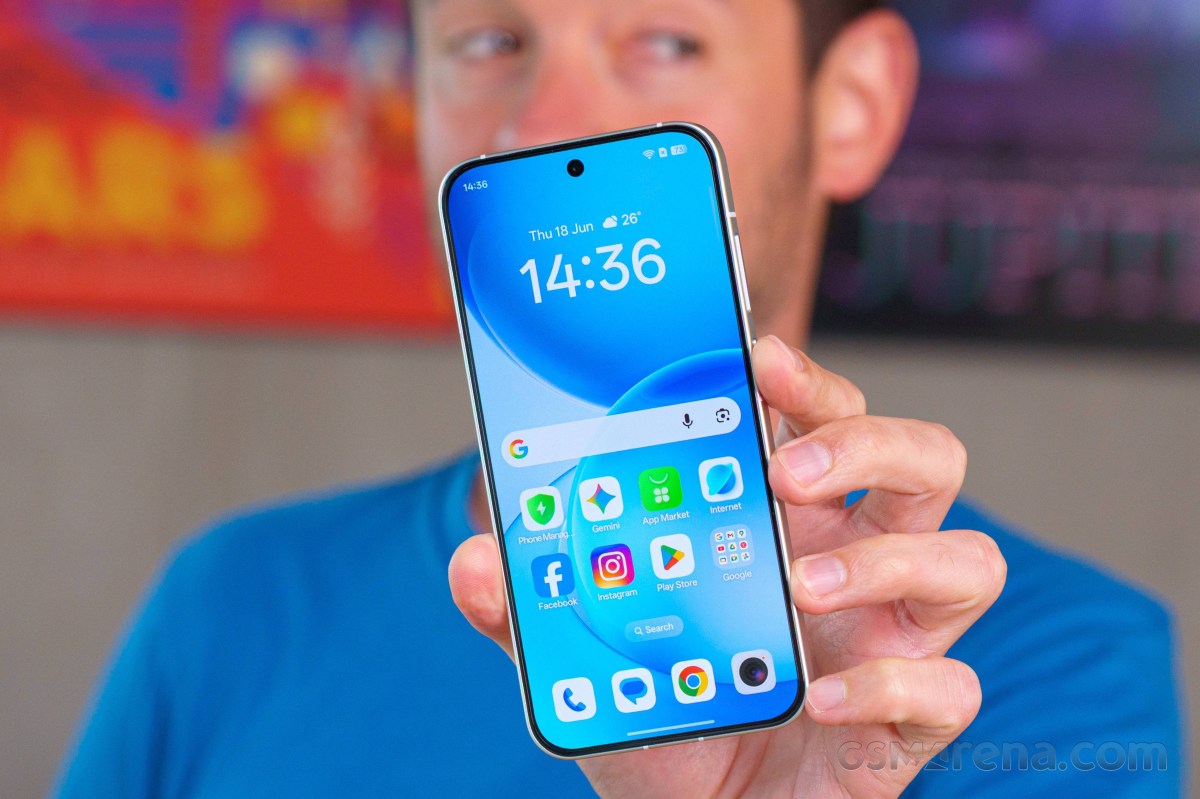
With that pricing, the handset has to go against upper-mid-range and near-flagship handsets. And history shows that the price will go down quickly after the launch period, so that's why we picked phones ranging between €500 and €600+, depending on their storage configurations because most of them start from 256GB, unlike the Reno16 in Europe, offered only in a 512GB flavor.
Xiaomi 17T • Honor 600 • Google Pixel 10
The Xiaomi 17T and the Honor 600 instantly come to mind as solid Reno16 alternatives. The first one will give you longer battery life, faster chipset and more potent camera hardware, except selfies. The Honor 600, on the other hand, has faster charging and arguably better main camera. Neither of those two alternatives, however, will give you the same premium feel and build quality in that small form factor. Size and build remain the Reno16's key selling point among its competitors.
If you are willing to spend a little bit more (in case you are shopping a few months after the Reno16's release), the Pixel 10 might not be such a bad choice in this price bracket. It's a compact, flagship phone with a proper camera hardware. At least compared to the Reno16. But despite its flagship status, the Pixel 10 fails to impress when it comes to battery life and charging speed. At least it supports wireless charging, which the Reno16 doesn't have. It's also entitled to more software updates.
Nothing Phone (4a) Pro • Xiaomi Poco X8 Pro Max • Oppo Reno15
Going down the price ladder, we find equally good alternatives, but considerably larger in size. The Poco X8 Pro Max, for example, is an extremely powerful alternative with longer battery life, faster charging, snappier chipset and it undercuts the Reno16's pricing. Again, the latter's advantages reside in its compact dimensions, impeccable design and more competent camera setup.
The Nothing Phona (4a) Pro is something in-between. It does have a comparable camera setup to the Reno16 and rises up to the challenge with a premium aluminum chassis, but with more modern, industrial design, but fails to deliver the same battery life as the Reno16 and it's a large phone, which might be a deal-breaker for some.
Last but not least, do consider the Reno15 as well. Especially if you are situated in Europe, where the newer model actually has slower charging and smaller battery. So if you are okay with the slightly bigger screen, then get the Reno15 and save a few bucks. The ultrawide camera improvements and the additional AI Snap Key aren't worth it.
Verdict
Like its more expensive sibling, the Reno16 Pro, the Reno16 is a solid all-rounder with design, build and dimensions, and impressive battery life, being its key selling points. We have no complaints of the display and loudspeakers either. The camera performance is also pretty good, especially the selfie.
However, the high price tag at launch combined with the less-than-impressive chipset in this class and the downgraded battery and charging (in Europe) put the Reno16 in a tough spot. There are much more powerful alternatives out there some of which have nicer cameras, too. The compact size and the impeccable build won't be enough to persuade many users in Europe, for example.
Pros
- Impeccable build, compact dimensions, IP66/IP68/IP69/IP69K certifications.
- Good OLED screen, HDR10+.
- Very good battery life.
- Solid photos from all four cameras, class-leading selfies.
- Convenient new hardware button, objectively useful AI features..
Cons
- Faster phones at similar prices are available.
- Uninspiring video quality.
- The European model gets a smaller battery than before, slower charging, too.
- Too expensive at launch.
Introduction and unboxing
Introduction and specs
Unlike the Reno15 series where the vanilla and the Pro models stood quite far apart, Oppo decided to bring the two devices closer together when designing the Reno16 family. The regular Oppo Reno16 is now the same size as the Reno16 Pro and shares more of its hardware with its more expensive sibling.
What's different? Well, the standard Reno16 runs on a less powerful chipset than the Reno16 Pro - Snapdragon 7 Gen 4. It's actually the same exact chipset that powers the Reno15.
The Reno16 also hosts a slightly downgraded camera setup compared to the Pro model, replacing the main 200MP camera with a 50MP one, but retains the excellent ultrawide and selfie shooters. On the other hand, it introduces a much-needed upgrade to the ultrawide camera, replacing the dated 8MP sensor with a more capable 50MP one.
Oppo Reno16 specs at a glance:
- Body: 151.2x72.4x8.2mm, 188g; Glass front, aluminum frame, glass back or composite plastic back; IP68/IP69K dust tight and water resistant (high pressure water jets; immersible up to 1.5m for 30 min).
- Display: 6.32" AMOLED, 1B colors, 120Hz, 3840Hz PWM, HDR10+, 600 nits (typ), 1800 nits (HBM), 3600 nits (peak), 1216x2640px resolution, 19.54:9 aspect ratio, 460ppi.
- Chipset: Qualcomm SM7750-AB Snapdragon 7 Gen 4 (4 nm).
- Memory: 256GB 8GB RAM, 256GB 12GB RAM, 512GB 8GB RAM, 512GB 12GB RAM; UFS 3.1.
- OS/Software: Android 16, ColorOS 16.
- Rear camera: Wide (main): 50 MP, f/1.8, 26mm, 1/1.95", 0.8µm, PDAF, OIS; Telephoto: 50 MP, f/2.8, 80mm, 1/2.75", 0.64µm, PDAF, OIS, 3.5x optical zoom; Ultra wide angle: 50 MP, f/2.0, 16mm, 116˚, 1/2.88", 0.61µm, AF.
- Front camera: 50 MP, f/2.0, 18mm, 100˚ (ultrawide), 1/2.75", 0.64µm, AF.
- Video capture: Rear camera: 4K@30/60fps, 1080p@30/60/120fps, gyro-EIS, HDR, OIS; Front camera: 4K@30/60fps, 1080p@30/60fps, gyro-EIS, HDR.
- Battery: 6,700mAh; 80W wired, 55W PPS, 13.5W PD/QC, 100% in 59 min, Reverse wired.
- Connectivity: 5G; eSIM; Wi-Fi 6; BT 5.4, aptX HD, aptX Adaptive, LHDC 5; NFC; Infrared port.
- Misc: Fingerprint reader (under display, optical); stereo speakers.
The Reno16 has the same 6.32-inch screen as the Pro model, which is smaller than before. Seemingly, Oppo is trying to penetrate two different price segments with compact phones, which might not be a bad plan as compact smartphones are far and few between these days.
Just like the Pro model, the battery situation is a bit convoluted. If you are situated outside of Europe, the Reno16 brings a modest upgrade in the battery capacity from 6,500 mAh to 6,700 mAh, compared to the Reno15. However, if you are a European consumer, expect that capacity to fall to 6,000 mAh. In fact, that's the model we received for a review.
At least the fast charging speeds are impressive regardless of the market. Reno16 still supports Oppo's 80W SuperVOOC charging.
Enough internal comparison, it's time to see how the Reno16 performs in real life and how it stacks against the competition.
Unboxing the Oppo Reno16
The Oppo Reno16 review unit we received came with a USB-A to USB-C cable for charging and data transfer, an 80W SuperVOOC charger and a transparent silicone case.
This is the type of retail package you'd normally expect in a market outside of the EU, but if you are buying this phone on the Old Continent, you won't have the charger in the box and you'll have to get it separately to make the most out of the phone's fast-charging capabilities.
Design, build, handling
Design and build
The Reno16 and Reno16 Pro have absolutely identical design, dimensions and weight. And that's good news for the regular Reno16. It's cheaper but offers the same high-quality build and premium feel. That distinctly premium, almost iPhone-esque aesthetic and physical feel remain intact.
Oppo Reno16 vs. Reno16 Pro
The device features a Gorilla Glass 7i protective sheet for the display, surrounded by aerospace-grade aluminum frame. The material for the rear glass panel is unspecified.
Thanks to its compact screen diagonal and slim profile, the phone feels ergonomic, making it a joy to use, even with one hand.
It is also exceptionally well protected against the elements, packing an impressive list of ingress protection certifications: IP66, IP68, IP69, and IP69K. This means it can withstand water, dust, and high-pressure jets.
Oppo Reno16
Unlike the Pro model, the vanilla Reno16 gets three colorways - Twilight Violet, Dream Purple and Pop White. The Pop White and Dream Purple variants are particularly impressive, utilizing a distinct 3D pop effect shaped like a planet on the rear panel. Tilting the device under direct lighting causes the graphic to shift and cast a subtle shadow. The test unit we have rocks the Pop White color scheme.
Going around, the right edge houses the volume rocker alongside the power button, while the left side hosts Oppo's dedicated AI Snap Key. Down at the bottom, the SIM tray accommodates up to two physical nano-SIM cards. The hardware supports eSIM functionality as well, though you can only keep two lines active at any given time.
Biometric unlocking is handled by an under-display optical fingerprint scanner, which proved fast and reliable throughout our review period. Our only real complaint is its positioning as it's set a bit too low, hovering right near the bottom lip, forcing an awkward thumb stretch when reaching for it.
Ultimately, the Reno series has always relied on aesthetic appeal as a major selling point, and the current generation refines that formula well.
Lab tests - display, battery life, charging, speakers
Smaller 6.32-inch, 120Hz OLED display
The Oppo Reno16 sports the same 6.32-inch display as its more expensive Reno16 Pro sibling - 6.32", 1216 x 2640px resolution, 10-bit color depth and HDR10+ support. The refresh rate is capped at 120Hz, but and we don't think this is a big difference. The Reno16 Pro's 144Hz refresh rate was hard to take advantage of - it's supported only in one game.
When it comes to brightness, the Reno16 delivers well. We are also happy to report that we didn't see the same brightness issues that the Pro model had. The Reno16 easily reached more than 2,100 nits in auto mode on a 75% white patch and went over 3,500 nits on a 10% patch. Those results ensure excellent outdoor viewing experience and HDR performance.
Max display brightness test
White test pattern (nits)
- Manual (75% fill)
- Auto (75% fill)
- Peak Auto (10% fill)
Oppo Reno16 (Gallery)
Pixel 10
Oppo Reno16 Pro
Oppo Reno15
Oppo Reno16
Poco X8 Pro Max
Xiaomi 17T
Even in a browser, where the system doesn't boost the brightness that high, the 1,000+ nits are perfectly fine for a comfortable outdoor use, even on a bright sunny day.
The minimum recorded brightness is 1.9 nits, which is good enough for a pitch-black room.
Refresh rate
The refresh rate modes are as usual - Auto, Standard and High. Auto and High behave the same way - 60Hz for idle screen and video playback, 90Hz for web browser and system apps, 60Hz for Netflix, YouTube, Camera, and more, 120Hz for UI, games, and benchmarks.
However, in Chrome, for example, you get only 90Hz unless you force it through the High setting, as it offers per-app refresh rate adjustments.
Battery life
Depending on where you live, the Reno16 has either bigger or smaller battery than its predecessor. In Europe, for instance, the device features a 6,000 mAh battery, a step down from the Reno15's 6,500 cell. On the other hand, the international Reno16 variant gets a 6,700 mAh battery, which is a tad more than before. We reviewed the 6,000 mAh version.
Even so, the 16:45 Active Use Score is respectable, even considering the size of the display.
Charging speed
The Reno16 is about average when it comes to charging speed with its 80W SuperVOOC charging support. It's slightly faster than some, but there are handful of other devices outpacing the vanilla Reno.
Interestingly, the device posted slower charging times compared to its predecessor, which has a slightly bigger 6,500 mAh battery.
Since the Pro posted considerably slower charging times than its predecessor with the new 6,700 mAh battery, we have our suspicion that Oppo didn't want to make the Pro look bad, so it changed the charging curve of the regular Reno16 as well. We can't think of any other reason why the Reno16 charges much slower than its predecessor.
Charging speed
- in 15 min
- in 30 min
- Time to full charge (from 0%)
Honor 600
Nothing Phone (4a) Pro
Poco X8 Pro Max
Oppo Reno16
Xiaomi 17T
Pixel 10
Oppo Reno16 Pro
Bypass charging is available, which will come in handy if you are gaming and don't want to heat up your phone and cripple your performance.
Smart charging and charging limit are available options for those wanting to extend the lifespan of the battery.
Speakers
The Reno16 features a set of hybrid stereo speakers, one in the earpiece and one full-fledged speaker at the bottom. Naturally, the bottom one is slightly louder and offers fuller bass.
Judging by the tuning and the loudness score we got, Oppo upgraded the speakers on the Reno16 and are now in line with the Reno16 Pro's. The two models seemingly share the same audio hardware.
The newer Reno offers an extended loudness slider to 300%, achieving a "Very Good" -23.8 LUFS loudness score. For the record, without the loudness boost, the handset achieved -26.1 LUFS, which is still pretty solid.
When assessing audio quality, we recorded the loudspeakers at 100% volume. We noticed that the bass is slightly less pronounced than we would like, but overall tuning is much better than most competitors. Except, of course, the Poco X8 Pro max, which excels in this department. It has a dedicated subwoofer.
Use the Playback controls to listen to the phone sample recordings (best use headphones). We measure the average loudness of the speakers in LUFS. A lower absolute value means a louder sound. A look at the frequency response chart will tell you how far off the ideal "0db" flat line is the reproduction of the bass, treble, and mid frequencies. You can add more phones to compare how they differ. The scores and ratings are not comparable with our older loudspeaker test. Learn more about how we test here.
Software and performance
Familiar ColorOS 16 on top of Android 16
Since the Reno16 series and the Reno15 series came out about six months apart, it's no surprise that the newer generation runs on the same software. Both the 16 and 15 series are also entitled to 5 years of major OS updates (not mentioning the exact number of updates, though) and 6 years of security patches. But both series start from ColorOS 16, which is based on Android 16.
We've covered the software already in our extensive Reno15 review so make sure to check that one out.
Home screen • Quick toggles • Recent apps
Interestingly, there are a few new features that debuted with the Find X9 Ultra, and you can find most of them on the Reno16 as well. For example, the AI Mind Space functionality is under the AI Mind Space. It offers integration with Google's Gemini, Perplexity AI, and DeepSeek. You can ask them to do one, but a more complicated query, or simply use them to compare answers and perspectives. It's a convenient way to ask more than one AI chatbot to look for relevant information.
Oppo AI
You also get the Snap Key from the X9 Ultra, which is also called the Plus Key on OnePlus phones. In the Reno16, Oppo adds "AI" in the beginning because that's what everyone does these days.
AI Snap Key
Anyway, the AI Snap Key is exactly what you'd expect from a hardware button on the side - it launches AI Mind Space by default, but you can remap it to your liking.
Benchmark performance
The Oppo Reno16 uses the same Snapdragon 7 Gen 4 chipset based on the 4nm manufacturing node as its Reno15 predecessor. The SD7G4 chip packs an 8-core processor with 1+4 +3 configuration. There's a Cortex-720 prime core clocked @ 2.8GHz, plus 4x performance Cortex-720 cores @ 2.4GHz and 3x efficiency Cortex-520 cores @ 1.8GHz.
The Adreno 722 GPU clocked at 1150 MHz handles all graphics. It features select Snapdragon Elite Gaming features, including its Adaptive Performance Engine 4.0. The GPU also supports the HDR10, HDR10+, HDR Vivid and HLG codecs.
The available memory configurations are 8GB/256GB, 12GB/256GB and 8GB/512GB. The latter is only available in Europe and coincidentally, it's the only available storage variant on the Old Continent. Regardless of the version you choose, you get UFS 3.1 storage.
GeekBench 6
- Single-core
- Multi-core
Poco X8 Pro Max
Xiaomi 17T
Oppo Reno16 Pro
Nothing Phone (4a) Pro
Honor 600
Oppo Reno16
Oppo Reno15
AnTuTu
- v10
- v11
Poco X8 Pro Max
Xiaomi 17T
Pixel 10
Nothing Phone (4a) Pro
Oppo Reno16
Honor 600
Oppo Reno15
3DMark
- Wild Life Extreme (Highest)
- Wild Life Extreme (Lowest)
Poco X8 Pro Max
Xiaomi 17T
Pixel 10
Nothing Phone (4a) Pro
Oppo Reno15
Oppo Reno16
Honor 600
The benchmark results show that the Reno16 utilizes the Snapdragon 7 Gen 4 to the fullest. It performs equally well as other handsets running the same chipset, like the Reno15 and the Honor 600. In fact, the Reno16 outpaces the latter by a little, but we believe the difference is within the normal margin of error.
However, it's quite evident from the charts that the Snapdragon 7 Gen 4 is far from the most powerful chip in this class. Aside from the Honor 600, the res of the competing handsets offer more computing power.
Sustained performance
Even though the Reno16 features a chipset that's supposedly easy to handle during long and heavy workloads, the CPU stress test leaves more to be desired. In fact, the Reno16 seems to fare slightly worse than is predecessor, which has the same exact chipset.
CPU and GPU stress tests
The GPU stress test, on the other hand, returned solid results.
Camera, photo and video quality
An upgraded ultrawide completes a 4x50MP setup
The Reno16 misses out on the Pro's large-sensor high-res main camera, but this new model does come with an upgrade to the ultrawide, compared to the previous non-Pro, and we're now looking at a triple 50MP setup on the back. The selfie camera is the old one - another 50MP unit, making up a quad 50MP configuration on the Reno16.
The Reno15 featured a modest 8MP ultrawide which did have AF, but the resolution could still leave you wanting. That's been addressed now and Oppo has fitted a 50MP Quad Bayer type sensor to match the rest of the modules. It's a fairly obscure GalaxyCore imager, but we're not snobs in that particular way. It's also the same sensor that's fitted to the Reno16 Pro.
That same sensor has now made it to the Reno16's selfie camera, replacing the Samsung JN5 of the previous generation, which just might be a minor downgrade (1/2.88" vs. 1/2.76" is about the smallest of sensor size differences there can be). That also means the non-Pro doesn't have the same selfie camera as the Pro this time around, but Oppo still kept the ultrawide lens on the front - an 18mm equivalent, with autofocus too.
The main camera and the telephoto remain unchanged from the Reno15. There's a Sony sensor on the primary camera with a fairly narrow 26mm lens that's stabilized. The telephoto does get to keep the JN5 sensor, unlike the selfie camera, and it's using an 85mm equivalent lens, so the 3.5x ratio on the zoom selector in the viewfinder is a bit of a rounding error (85/26=3.3x).
- Wide (main): 50MP Sony LYT-600 (1/1.95", 0.8µm-1.6µm); 26mm, f/1.8, OIS, multi-directional PDAF (10cm - ∞); 4K60 video recording.
- Telephoto: 50MP Samsung ISOCELL JN5 (S5KJN5, 1/2.76", 0.64µm-1.28µm); 85mm, f/2.8, OIS, multi-directional PDAF (40cm - ∞); 4K60.
- Ultrawide: 50MP GalaxyCore GC50F6 (1/2.88", 0.61µm-1.22µm); 16mm, f/2.0, PDAF; 4K60.
- Front camera: 50MP GalaxyCore GC50F6 (1/2.88", 0.61µm-1.22µm); 18mm, f/2.0, PDAF; 4K60.
Daylight photo quality
Main camera
The Reno16 doesn't have the Pro's High-resolution option and since this time the Pro does actually tend to shoot in 26MP when you have that enabled, there's now a bit more of a difference in the daytime results you'd get from the two phones. However, while that may be the case, the vanilla Reno16 still captures quite great shots in good light.
We're looking at very good detail with mostly natural rendition, wide dynamic range, and generally pleasing (if a little unenthusiastic) colors.
Daylight samples, main camera (1x)
Similarly, skin tones could use a nudge in vibrance, though they're pretty good as is too. The default blur level in Portrait mode just might be a little too much.
Human subjects, main camera (1x): Photo mode • Portrait mode
The full-res mode is one of those all-too-common implementations that produces 50MP images that look like upscaled versions of the binned images, with no detail benefits.
Daylight samples, main camera (1x), 50MP
The 2x zoom shots leave us a little happier than what we got on the Reno15 - it could be down to processing tweaks or just the more pleasant weather and light, but these are sharper and have better detail definition. As is often the case with Oppo phones, brighter areas are rendered noticeably softer - look at the pavement in the first two samples, for example.
Daylight samples, main camera (2x)
We're also liking the way the Reno16 handles photos of people at 2x - more so in Photo mode, than the Portrait mode's rendition with its somewhat excessive default blur level.
Human subjects, main camera (2x): Photo mode • Portrait mode
Telephoto camera
The telephoto's 3.5x zoom photos are very good as well. They're sharp, noise-free, and detailed in bright outdoor conditions, and a little less so in dimmer indoor scenes. Dynamic range is wide, there are no white balance issues, and colors are generally good, if probably once again a little lacking in vibrance - still though, no real complaints. What we could complain to no end, however, is the minimum focusing distance of around 40cm which limits your options for taking close-ups - more on that in a bit.
Daylight samples, telephoto camera (3.5x)
That's a non-issue for headshots, where you'll be standing further from your subject anyway. The 85mm focal length means good perspective compression and facial proportions. The bokeh effect is also more believable at this focal length.
Human subjects, main camera (3.5x): Photo mode • Portrait mode
Here's a set of full-res samples at 3.5x zoom for completeness' sake.
Daylight samples, telephoto camera (3.5x), 50MP
At 7x zoom, you'll get good results overall, with some of that selective softness in the brightly lit areas of the images.
Daylight samples, telephoto camera (7x)
Ultrawide camera
The old model's unassuming 8MP ultrawide camera punched above its weight, but the new 50MP is better. Detail is very good for the class, dynamic range is great, colors are on point. The autofocusing capability means you can get sharp shots of nearby subjects as well.
Daylight samples, ultrawide camera (0.6x)
The full-res mode isn't of much use though, as usual.
Daylight samples, ultrawide camera (0.6x), 50MP
Close-ups
Close-ups are one area where you'll likely find the Reno16 wanting. The telephoto camera's minimum focusing distance is too long and shooting at 7x doesn't inspire confidence with its quality. Similarly, the 2x zoom mode on the main camera doesn't do wonders in dimmer conditions at close range.
Close-up samples, main camera (2x)
Close-up samples, telephoto camera (3.5x)
Close-up samples, telephoto camera (7x)
Low-light photo quality
Main camera
Low-light photos from the Reno16's main camera aren't half bad either. Detail is good to very good, depending on the scene and how you draw the lines, though there's generally a little too much sharpening for our tastes. Exposures are well balanced and dynamic range is excellent with both extremes developed nicely. The auto white balance is dependable, perhaps even more so than on the Pro and colors are looking great overall.
Low-light samples, main camera (1x)
The 2x zoom photos are only alright if you don't look at them at 1:1 - from afar they're fine, on a pixel level, they're too soft.
Low-light samples, main camera (2x)
Telephoto camera
On the previous model, we saw a few instances where the phone took 3.5x zoom low-light shots with its main camera, with predictably terrible results. Here it only does that on occasion only for the darker scenes if you shoot in the dedicated Night mode. And you don't need to use Night mode, really, because the full-auto mode does everything for you, and it does it well. We're looking at good detail - not flagship-level, but good for the class. Dynamic range is great, the white balance is reliable and colors are a little muted, but not all the way dull.
Low-light samples, telephoto camera (3.5x)
The 7x zoom shots are decent, but you'll be wise to refrain from pixel-peeping.
Low-light samples, telephoto camera (7x)
Ultrawide camera
The ultrawide's low-light performance is excellent from a global perspective, with great dynamic range and color rendition. On a pixel level, there's more to be desired, with shadows being pretty soft, though better-lit areas and brighter scenes do look good all things considered.
Low-light samples, ultrawide camera (0.6x)
Selfies
The Reno16's selfie camera sensor is different from the one on the previous generation, which also made it to the Reno16 Pro, but the vanilla model still takes very good selfies. Colors are a bit less saturated, which is a minor letdown, and in some scenes there's a hint of softness that we didn't see on the Pro, but these are relatively small differences and certainly not something to go into the cons list of the Reno16's selfies.
We're getting excellent detail, whether at the native 18mm focal length (0.6x in the zoom selector) or the 1x zoomed-in mode, accurate skin tones, and wide dynamic range. The ultrawide focal length is a selling point in itself, and the AF is most welcome too.
Selfie samples, 0.6x (native)
Here's a few samples shot at the 1x (great) and 2x (usable) zoom levels.
Selfie samples: 1x • 2x
Photo quality verdict
The Reno16 is a well-rounded performer for stills, the new ultrawide improving on a somewhat weak spot in the old model's resume. The other con remains though - there's no good option for taking close-ups. That aside, you can count on a stable showing across the native zoom range in daylight and also good results at night, with the 'digital' zoom levels (2x and 7x) being mostly okay during the day and just about adequate at night. Selfies are once again excellent.
Video quality
The Reno16 can record video at up to 4K60 with all of its cameras - now that the ultrawide has been upgraded, it can join the other three in offering 4K. There's still no 24fps option, though. There's a Pro video mode, which is somewhat of a misnomer, since it locks you into 1080p30 - sure, it offers exposure controls and a miniature histogram, but where did the resolution and frame rate settings go?
As usual, you can choose between the h.264 and h.265 (HEVC) codecs and the latter is the default one. You can also record in HDR in all of the quality settings. There's an Ultra Steady stabilization mode that's off by default, but there's some level of stabilization that's always on even if you keep the Ultra Steady switched off.
You can hit '> play' below and use the '>| next' button to advance through the playlist of all video samples, or you can watch the full playlist on YouTube.
The Reno16's main camera captures solid 4K videos with good detail, wide dynamic range, and pleasing colors, though they seem to lack a bit of pop. The telephoto and the ultrawide have a touch higher saturation, which makes them look better in our book. The new ultrawide is a significant step up in detail over the previous one (it's 4K vs. 1080p, yes, but it's also some pretty nice 4K). The telephoto is nicely sharp and detailed too.
Video screengrabs, daylight: 0.6x • 1x • 2x • 3.5x • 7x
In the dark, the main camera and the telephoto don't exactly impress, but they do a decent job with sharpness, plus dynamic range and colors are good too. The ultrawide is somewhat surprisingly good for the class, not only capturing sharper footage than the unremarkable Pro, but also being quite alright in isolation too.
Video screengrabs, low light: 0.6x • 1x • 2x • 3.5x • 7x
We had a few complaints about the main camera stabilization on the Reno15, and the Reno16 is still not quite ideal when it needs to deal with cancelling walking shake. When shooting from a stationary position, however, all three rear cameras do an excellent job.
Video quality verdict
The Reno16's video recording performance isn't exactly praiseworthy, but it's not half bad either. The new ultrawide is a most welcome sight, bringing in 4K to the non-Pro model, and it captures pretty high-quality clips in daylight and quite usable ones at night. The main camera and the telephoto don't shine, but they maintain a reasonably good level in all conditions. Walking shake is the one area where stabilization could use some work, but otherwise things are nicely smooth.
Alternatives, pros and cons, verdict
The competition
Just like its predecessor, the Reno16's launch price seems rather steep. The handset starts at €900 in Europe even though the only available 12GB/512GB memory configuration is generous it's still not cheap. The good news is an early bird pricing until the end of July brings that down to €800. In India, the starting price is INR 61,999 for the base 8GB/256GB variant.
With that pricing, the handset has to go against upper-mid-range and near-flagship handsets. And history shows that the price will go down quickly after the launch period, so that's why we picked phones ranging between €500 and €600+, depending on their storage configurations because most of them start from 256GB, unlike the Reno16 in Europe, offered only in a 512GB flavor.
Xiaomi 17T • Honor 600 • Google Pixel 10
The Xiaomi 17T and the Honor 600 instantly come to mind as solid Reno16 alternatives. The first one will give you longer battery life, faster chipset and more potent camera hardware, except selfies. The Honor 600, on the other hand, has faster charging and arguably better main camera. Neither of those two alternatives, however, will give you the same premium feel and build quality in that small form factor. Size and build remain the Reno16's key selling point among its competitors.
If you are willing to spend a little bit more (in case you are shopping a few months after the Reno16's release), the Pixel 10 might not be such a bad choice in this price bracket. It's a compact, flagship phone with a proper camera hardware. At least compared to the Reno16. But despite its flagship status, the Pixel 10 fails to impress when it comes to battery life and charging speed. At least it supports wireless charging, which the Reno16 doesn't have. It's also entitled to more software updates.
Nothing Phone (4a) Pro • Xiaomi Poco X8 Pro Max • Oppo Reno15
Going down the price ladder, we find equally good alternatives, but considerably larger in size. The Poco X8 Pro Max, for example, is an extremely powerful alternative with longer battery life, faster charging, snappier chipset and it undercuts the Reno16's pricing. Again, the latter's advantages reside in its compact dimensions, impeccable design and more competent camera setup.
The Nothing Phona (4a) Pro is something in-between. It does have a comparable camera setup to the Reno16 and rises up to the challenge with a premium aluminum chassis, but with more modern, industrial design, but fails to deliver the same battery life as the Reno16 and it's a large phone, which might be a deal-breaker for some.
Last but not least, do consider the Reno15 as well. Especially if you are situated in Europe, where the newer model actually has slower charging and smaller battery. So if you are okay with the slightly bigger screen, then get the Reno15 and save a few bucks. The ultrawide camera improvements and the additional AI Snap Key aren't worth it.
Verdict
Like its more expensive sibling, the Reno16 Pro, the Reno16 is a solid all-rounder with design, build and dimensions, and impressive battery life, being its key selling points. We have no complaints of the display and loudspeakers either. The camera performance is also pretty good, especially the selfie.
However, the high price tag at launch combined with the less-than-impressive chipset in this class and the downgraded battery and charging (in Europe) put the Reno16 in a tough spot. There are much more powerful alternatives out there some of which have nicer cameras, too. The compact size and the impeccable build won't be enough to persuade many users in Europe, for example.
Pros
- Impeccable build, compact dimensions, IP66/IP68/IP69/IP69K certifications.
- Good OLED screen, HDR10+.
- Very good battery life.
- Solid photos from all four cameras, class-leading selfies.
- Convenient new hardware button, objectively useful AI features..
Cons
- Faster phones at similar prices are available.
- Uninspiring video quality.
- The European model gets a smaller battery than before, slower charging, too.
- Too expensive at launch.